
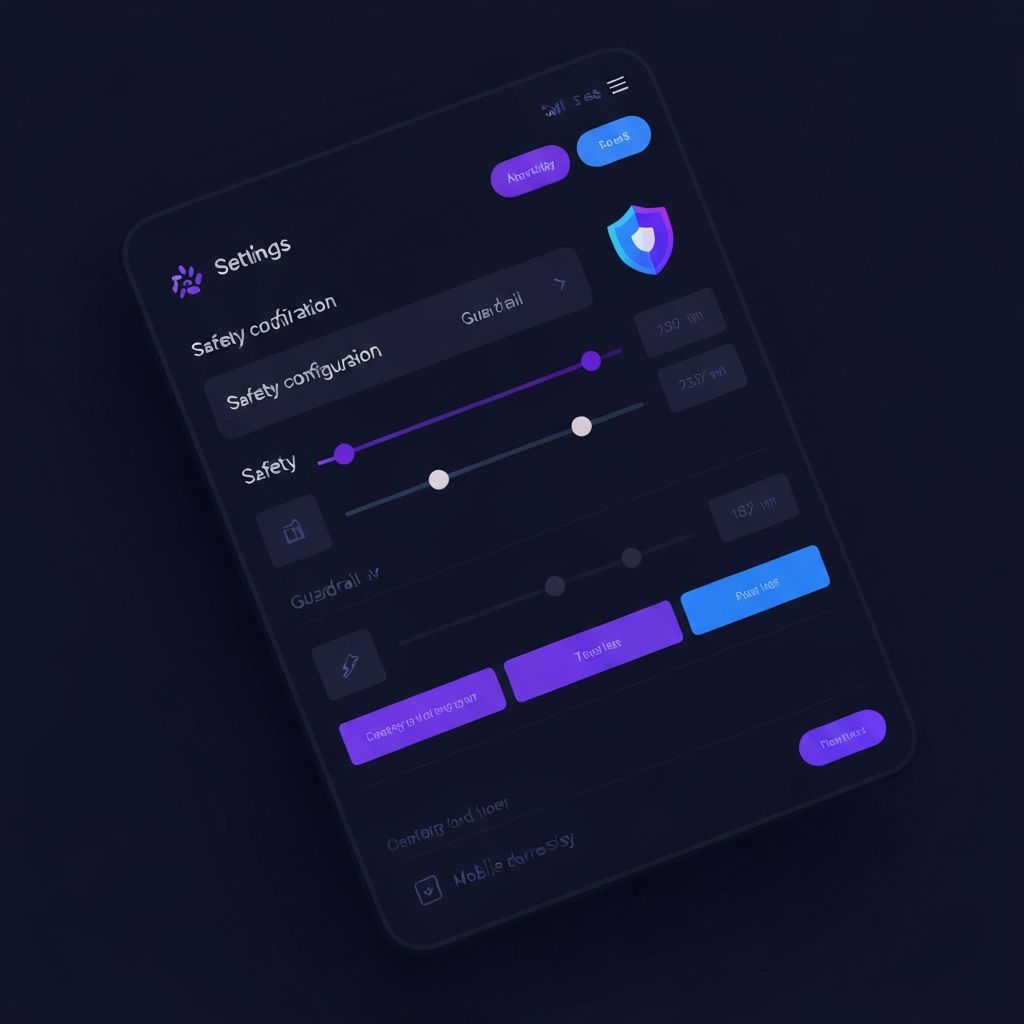
Automation Without the Black Box: Seven Guardrails for Safer Apple Search Ads
A practical framework for automating routine Apple Search Ads decisions while protecting budgets, data quality, and human judgment.
KeenBid Team · Jul 30, 2026
Automation can remove hundreds of repetitive Apple Search Ads decisions from an operator's week. It can also amplify a bad signal faster than a person ever could. The difference is not whether the system uses AI. The difference is whether automation is bounded by rules that reflect the team's risk tolerance.
Safe automation begins with a simple principle: **every action should have a reason, a limit, and a path back.**
1. Bid floors and caps
Every automated bidding scope needs an allowed range. Floors prevent strategically important keywords from being pushed below useful participation. Caps prevent a strong but noisy signal from escalating cost beyond the account's economics.
Use different ranges for brand, competitor, generic, and discovery traffic. A single global cap is easy to configure but rarely reflects the value and volatility of each campaign type.
2. Maximum change per action
Even when the desired bid is far from the current bid, moving there in one step can create avoidable risk. Limit the percentage or absolute change the system can make in a single cycle.
Smaller steps let new auction data arrive before the next decision. They also make it easier to separate the impact of a bid change from normal market variation.
3. Change-frequency limits
A keyword should not bounce up and down every time a short reporting window changes direction. Set a maximum number of actions per keyword or campaign per day, and require a meaningful amount of new evidence between changes.
Frequency limits are especially important when performance data updates at different speeds. Auction metrics may be fresh while attributed revenue is still incomplete.
4. Minimum evidence thresholds
Automation should know when not to act. New or low-volume keywords often have conversion estimates that are too uncertain for a large adjustment.
A threshold can consider taps, installs, spend, elapsed time, and model confidence. The correct response may be to hold the bid, make a small exploratory move, or ask an operator to review the term's intent.
“No action” is a valid automated decision when the evidence is weak.
5. Approval gates for high-risk actions
Not all actions deserve the same autonomy. A modest bid decrease on a low-volume generic keyword is different from raising a campaign budget or increasing a high-spend competitor bid.
Create approval gates based on risk, for example:
- Budget changes
- Bid increases above a defined percentage
- Actions affecting high-spend campaigns
- Pausing campaigns or ad groups
- Broad negative keywords
- Changes based on stale or incomplete data
Routine, reversible actions can run automatically. High-impact actions should arrive as recommendations with a clear before-and-after preview.
6. Anomaly stops and circuit breakers
Automation needs an emergency brake. If spend spikes, conversion rate collapses, synchronization is delayed, or an unusual number of changes is proposed at once, pause execution and alert the team.
A circuit breaker should explain what triggered it and which scope is paused. Stopping one campaign is usually better than disabling every account, but the right level depends on the anomaly.
7. Audit trails and rollback
Every action should record:
- The previous and new value
- The evidence used
- The rule or model version involved
- The person or automation policy that approved it
- The execution time and data-freshness state
Rollback should be designed before automation goes live. A team that can restore a known recent state can move faster with more confidence than one that must reconstruct changes from scattered logs.
Use autonomy levels, not an on/off switch
Automation maturity is a ladder:
1. **Observe:** surface insights without recommending a change.
2. **Recommend:** propose an action with evidence.
3. **Approve:** let a person accept or edit the action.
4. **Auto-execute:** run low-risk actions within strict boundaries.
5. **Expand:** increase autonomy only after reviewing results and exceptions.
This approach lets teams earn trust with the system. It also keeps the operator responsible for strategy while the software handles repeatable execution.
How KeenBid keeps automation explainable
KeenBid pairs bid, keyword, negative, and budget recommendations with visible reasoning, proposed before-and-after values, data-freshness indicators, and configurable safety rules. Teams can whitelist high-confidence actions for execution while routing larger or unusual changes through approval.
If performance moves unexpectedly, anomaly monitoring and rollback context help the operator understand what changed instead of facing an unexplained black box.
The objective is not maximum automation. It is dependable automation: more routine decisions handled, fewer preventable surprises, and human judgment focused where it creates the most value.

Keep exploring
Read more practical articles, or explore how KeenBid helps teams turn performance signals into action.