
How to choose bid floors for Discovery keywords on ASA
Discovery keywords have near-zero historical CVR data. Here's the Bayesian framework we use to set safe bid floors without leaving money on the table.
May 14, 2025
Discovery keywords — broadly matched terms Apple surfaces through Search Match — are one of the highest-upside, highest-risk areas of any ASA account. With near-zero historical conversion data, setting a bid floor requires a principled approach rather than guesswork.
The Problem with Discovery Bids
Most teams either set discovery bids too low (missing scale) or too high (burning budget on unproven terms). The core issue is sparse data: a keyword with 3 taps and 0 conversions tells you almost nothing about its true CVR.
A Bayesian Prior for CVR Estimation
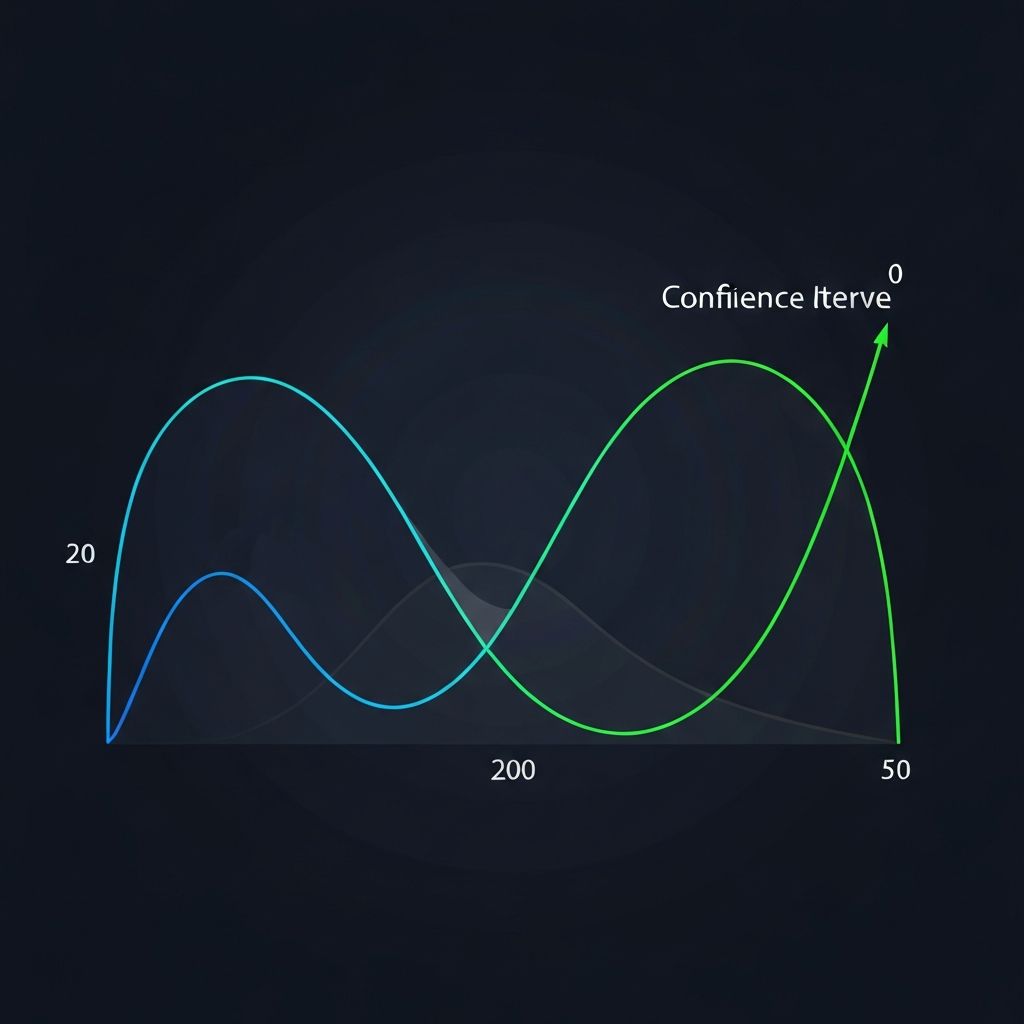
We use a Beta distribution as a prior over CVR, informed by the account's aggregate CVR across proven keywords. For a new discovery keyword, the posterior CVR estimate starts close to the account average and updates as taps accumulate.
The formula for expected CVR given alpha (conversions) and beta (non-conversions):
E[CVR] = (alpha + prior_alpha) / (alpha + beta + prior_alpha + prior_beta)
With this estimate in hand, you can calculate an expected CPI and back-solve to a max CPT bid.
Practical Bid Floors
Our recommendation: set discovery bid floors at 60–70% of your proven keyword CPT average. This gives you enough volume to collect data without overcommitting budget. Once a keyword accumulates 50+ taps, let the main bidding engine take over.
Built-in Safety
Keenbid flags discovery keywords with fewer than 30 taps with a low-signal warning and won't auto-raise their bids above the floor until statistical confidence reaches 80%.

Put this into practice with Keenbid
Keenbid automates everything described in this article — Bayesian bid models, intent classification, safety guardrails, and multi-market intelligence — in one platform.
30-day free trial. No credit card required.